
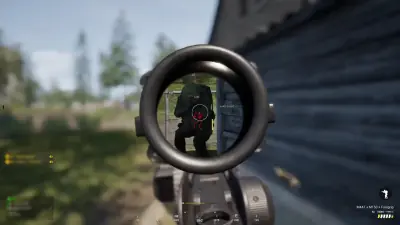
How to Spot Enemies in Squad: Observation, Audio and Team Awareness
Improve your battlefield awareness in Squad. Learn how to identify enemy movement, recognize useful visual and audio cues, and communicate positions to your team.
Spotting enemies in Squad is not always straightforward.
Large maps, dense vegetation, buildings, changing lighting, and long engagement distances can make it difficult to identify opposing players.
Good battlefield awareness comes from more than simply looking in the direction of gunfire.
Players need to understand terrain, recognize movement, use available equipment, and communicate useful information to their teammates.
This guide covers practical ways to improve enemy spotting in Squad.
1. Understand the Terrain
Terrain knowledge is one of the most useful parts of battlefield awareness.
Different environments create different visual challenges.
For example:
- Forests provide cover but can conceal movement.
- Urban areas create numerous visual obstructions.
- Hills offer elevation but may expose your position.
- Open fields provide longer sightlines but less natural cover.
- Roads and pathways can reveal movement between objectives.
Instead of constantly scanning the entire environment, pay attention to areas where movement is most likely to occur.
2. Learn to Recognize Player Movement
Players often look for obvious movement, but small visual changes can also be important.
When observing an area, look for:
- Movement between buildings.
- Changes in vegetation.
- Silhouettes against contrasting backgrounds.
- Repeated movement around cover.
- Players crossing exposed terrain.
- Changes near commonly used routes.
Avoid assuming that every unusual movement is an enemy.
Use the available visual information carefully before communicating a position.
3. Use Optics Appropriately
The appropriate optic can make a difference depending on the role and engagement distance.
Different situations call for different observation approaches.
An optic with higher magnification may help identify distant details, while a wider field of view can be more practical in closer engagements.
However, magnification alone does not guarantee better awareness.
A narrow sight picture can make it easier to lose track of the surrounding environment.
Balance detailed observation with awareness of nearby positions.
4. Pay Attention to Audio Cues
Sound can provide useful information even when an enemy is not visible.
Gunfire, vehicles, explosions, and other environmental sounds can help players understand what is happening around them.
When listening for important information, consider:
- Approximate direction.
- Distance.
- Whether the sound is repeated.
- Whether it is moving.
- Whether teammates have reported similar activity.
Avoid making confident location calls based on a single ambiguous sound.
Combine audio information with visual observation and team reports.
5. Use the Map to Understand Enemy Activity
The tactical map is useful for understanding the wider battlefield.
It can help players interpret reports and identify areas that deserve more attention.
Look at:
- Current objectives.
- Friendly squad locations.
- Reported enemy markers.
- Likely movement routes.
- Important terrain features.
- Nearby FOBs and infrastructure.
The map should complement direct observation rather than replace it.
For more detail, read the Squad map guide.
6. Communicate What You See
Spotting an opponent is only useful to your team when the information is communicated effectively.
A good enemy callout should include:
1. Approximate location. 2. Direction. 3. Number of visible players, when reasonably clear. 4. Relevant movement or activity. 5. Whether the information is current or based on an earlier observation.
For example, describing an enemy movement near a recognizable building is more helpful than simply shouting that someone is nearby.
Squad provides in-game voice communication and map markers to help teammates coordinate battlefield information.
7. Understand Important Battlefield Locations
Some positions deserve more attention because of their strategic importance.
These include:
- Objective approaches.
- Common vehicle routes.
- FOB surroundings.
- Defensive positions.
- Roads connecting objectives.
- Areas that provide useful elevation.
Understanding why these locations matter makes observation more purposeful.
You are not simply searching for movement. You are looking for activity that could affect the current objective.
8. Avoid Tunnel Vision
Focusing too long on one distant area can make you unaware of nearby threats.
Regularly reassess your surroundings.
Balance observation of distant positions with awareness of your immediate area.
Also consider what your teammates are reporting. Your individual view may provide only part of the information needed to understand a situation.
Common Enemy-Spotting Mistakes
Some common mistakes include:
- Constantly looking through an optic.
- Ignoring nearby surroundings.
- Misinterpreting friendly movement.
- Giving inaccurate location reports.
- Ignoring audio cues.
- Forgetting to check the tactical map.
- Remaining in an exposed observation position for too long.
Avoiding these habits helps improve awareness over time.
Final Thoughts
Spotting enemies in Squad is a skill that develops through observation, familiarity with the maps, and communication.
Learn how to recognize movement, interpret audio, understand terrain, and provide useful information to your teammates.
A player who communicates accurate information can contribute to the entire squad, even without being involved in every direct engagement.